
Food manufacturing software that keeps the lot record while you cook
TrackFinch is food manufacturing software for sauce, bakery, snack and candy makers. Receive, cook and ship the way you do now, and every ingredient lot is tied to its batch, and every batch to the customers who got it.
Free for everyone: every module, the whole team, no card.
Example workspace
Batch WO-0142
Roasted tomato salsa, 16 oz jar
- Made
- 480 jars
- Lot
- WO-0142
- Best-by
- 2027-10-14
Origin: what went into it
- Fire-roasted tomatoes120 lbL260928-1 · MF-87940
- Fire-roasted tomatoes264 lbL261012-1 · MF-88213
- Yellow onion, diced67.2 lbL261013-2 · ON-5521
- Jalapeño, diced24 lbL261013-3 · JP-1907
- Sea salt4.8 lbL260815-1 · SS-2210
What "lot codes on every case" actually asks you for
A lot code names one batch. When a grocer, an auditor or a recall asks about that batch, they want two answers, fast.
Which ingredient lots went in
The tomatoes, the onions, the salt. Your supplier's lot for each, so you know who to call.
Who got it
Every store and distributor that took jars from that batch, and how many.
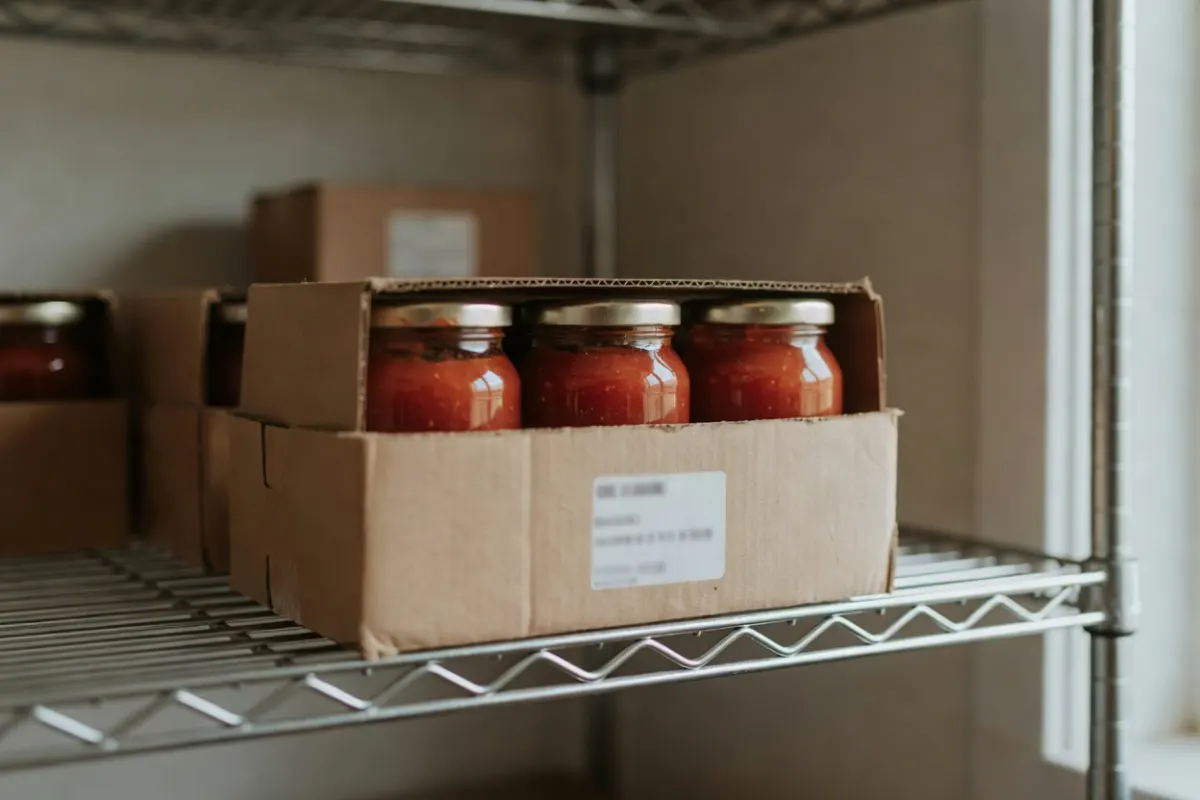
Here is one batch, kept by hand
Batch sheet
| Ingredient | Our lot | Supplier lot | Used |
|---|---|---|---|
| Fire-roasted tomatoes | L260928-1 | MF-87940 | 120 lb |
| Fire-roasted tomatoes | L261012-1 | MF-88213 | 264 lb |
| Yellow onion, diced | L261013-2 | ON-5521 | 67.2 lb |
| Jalapeño, diced | L261013-3 | JP-1907 | 24 lb |
| Sea salt | L260815-1 | SS-2210 | 4.8 lb |
| Customer | Order | Shipped | Jars |
|---|---|---|---|
| Eastside Grocery | SO-2210 | 2026-10-15 | 96 |
| Plaza Market | SO-2211 | 2026-10-15 | 96 |
| Mountain Natural Foods | SO-2212 | 2026-10-16 | 144 |
| Route 6 Distribution | SO-2213 | 2026-10-16 | 72 |
Sample batch from an example salsa kitchen. Customer names are samples.
For one product and one supplier, that sheet is enough
If you make one thing from one delivery at a time, keep the sheet. It answers both questions, and nobody has to learn anything new. It starts to break when:
- A delivery splits across batches. Look at the tomatoes on that sheet: two lots in one batch, and the newer lot still has 216 lb left for the next one.
- Two people restock the walk-in. Nobody writes down which case got opened first, so the sheet says what should have gone in.
- A grocer wants it by tomorrow. Finding every batch one supplier lot touched means paging through a binder, sheet by sheet.
Next: how TrackFinch fills in that same sheet while your crew receives, cooks and ships.
You do three things. TrackFinch writes the rest down.
Your crew receives, cooks and ships the way they do now. Every line of that batch sheet gets written while they work, on the phone in their pocket.
Scan the supplier's case. The label fills lot and expiry. The delivery gets its own lot. Only ingredients that need a check land On hold.
Tap Done on the batch. The oldest released lots come out of stock, and the batch gets its own lot and best-by date.
Enter the cases on the order. The oldest finished lot goes first, and the order remembers which lot went to which customer.
Nobody on the floor typed a lot number. Nobody copied a sheet into a spreadsheet after close.
What TrackFinch wrote down
Example workspace
Received
Fire-roasted tomatoes · Supplier Ridgeline Foods · 12 cases × 40 lb
- Supplier lot · from the case labelMF-88213
- Expiry · from the case label2027-03-02
- Our lotL261012-1480 lb
- Status · tomatoes don't need a checkReleased
Batch WO-0142 done
Roasted tomato salsa, 16 oz jar · by the recipe, oldest released lots first
- Fire-roasted tomatoes · older lot, used upL260928-1120 lb
- Fire-roasted tomatoesL261012-1264 lb
- Yellow onion, dicedL261013-267.2 lb
- Jalapeño, dicedL261013-324 lb
- Sea saltL260815-14.8 lb
- Made · its own lotWO-0142480 jars
- Best-by2027-10-14
Shipped
WO-0137 had 24 jars left, so it went first
- SO-2210 Eastside GroceryWO-013724 jars
- SO-2210 Eastside GroceryWO-014296 jars
- SO-2211 Plaza MarketWO-014296 jars
- SO-2212 Mountain Natural FoodsWO-0142144 jars
- SO-2213 Route 6 DistributionWO-014272 jars
WO-0142: 408 jars shipped, 72 on hand
Sample data from an example salsa kitchen. Customer names are samples.
Example workspace · Shop floor
My production plan
1 job on your plate · due first at the top
Built for the prep floor, not the office
A lot of food manufacturing software assumes someone sits at a desk. Your crew has flour on their gloves, so the record gets written on the phones they already carry, at the dock, the walk-in and the prep table.
Nothing to install
TrackFinch runs in the phone's browser. Sign in and go: no app store, no special scanner, no tablet bolted to the wall.
The camera reads the case
Point the phone at the barcode on the supplier's case. The supplier lot and expiry fill themselves in, so nobody types a lot number with wet gloves.
Each person sees their own plate
The Shop floor screen opens on My production plan: the jobs on your plate, due first at the top. Start one and it's yours.
Labels from the office printer
Lot labels print on a standard Avery 5163 sheet (2" × 4", 10 a sheet). Each carries a QR code that opens the lot in TrackFinch.
Two things to know before you hand it out
It needs a signal. There's no offline mode, so if the walk-in kills your bars, scan the cases at the door. Screens aren't live. They show the latest when you open or refresh them, so pull down to see what changed.
The oldest sack goes first. The held one doesn't go at all.
When a batch is done, TrackFinch takes each ingredient from the released lot that expires first, wherever that sack sits on the shelf. And a lot someone put On hold (a torn, damp sack, say) is skipped until someone checks it and taps Release.
First in, first out on paper works fine until two people restock the same shelf. Then the newest sacks end up in front, and the oldest ones end up in the bin.
Masa flour, 50 lb sack
Supplier Mill Creek Grain · 4 lots on the shelf
Example workspace
- Batch WO-0143 takes 80 lbSkipped
L260826-1
- Supplier lot
- GM-4390
- Expires
- 2026-11-06
- On hand
- 100 lb
- Batch WO-0143 takes 80 lbSkipped
L260902-1
- Supplier lot
- GM-4471
- Expires
- 2026-11-12
- On hand
- 150 lb
- Batch WO-0143 takes 80 lbSkipped
L260916-1
- Supplier lot
- GM-4520
- Expires
- 2026-11-30
- On hand
- 150 lb
- Batch WO-0143 takes 80 lbSkipped
L261016-1
- Supplier lot
- GM-4688
- Expires
- 2027-01-12
- On hand
- 150 lb
Tap Release on the held sack to see where the next batch takes from.Released and first to expire, so it's next in line.
Batch WO-0143
Tortilla chips, 12 oz bag · 200 bags
L260826-1 expires sooner, but it's On hold, so it's skipped.L260826-1 is released now and expires first.
Needs attention
Example workspace
Expiring in the next 30 days
- Lot L261013-3 expires in 8 daysJalapeño, diced
- Lot L261013-2 expires in 15 daysYellow onion, diced
- Lot L260826-1 expires in 18 daysMasa flour, 50 lb sack
- Lot L260902-1 expires in 24 daysMasa flour, 50 lb sack
On hold
- Lot L260826-1 on QC holdMasa flour, 50 lb sack · 100 lb waiting for release
Held lots wait under On hold; they join the expiry list once released.
Planning reads your open orders, recipes and stock, then lists what's short and what to make next, by due date. Each line has a button to plan the batch or draft the purchase order for the ingredient you're short of.
When a supplier calls about a bad lot
Type the supplier's lot number into Lots. One screen shows every batch it went into and every customer who got those cases.
Say Ridgeline Foods calls about MF-88213. You land on lot L261012-1: 264 lb went into batch WO-0142, and 408 of those jars went to 4 customers. That's your call list.
- The customer list as a spreadsheet: who got which jars, on which order, on which day.
- Recall letters, one per customer, ready to print.
- A zip of the certificates (COAs) attached to the lots on an order, for the grocer who asks.
- A mock recall to practise on: start the timer, find everything, print the report.
It's the record of what happened, not a certificate. Who to call and what to pull is still your decision.
The whole recall, from the supplier's call to the last letter, is walked through on our food traceability software page. How each delivery gets its own lot number and keeps it from the dock to the order is on the lot traceability software page.
Lot L261012-1Released
Fire-roasted tomatoes · Supplier lot MF-88213 · 216 lb on hand
Origin: what went into it
Delivery from Ridgeline Foods
Received 2026-10-12 · 12 cases × 40 lb · expires 2027-03-02
Where used: what it became
Batch WO-0142 · Roasted tomato salsa, 16 oz jar
264 lb used · 480 jars · done 2026-10-14
Shipments: who received it
| Customer | Order | Shipped | Jars of WO-0142 |
|---|---|---|---|
| Eastside GroceryShipped 2026-10-15 | SO-2210 | 2026-10-15 | 96 |
| Plaza MarketShipped 2026-10-15 | SO-2211 | 2026-10-15 | 96 |
| Mountain Natural FoodsShipped 2026-10-16 | SO-2212 | 2026-10-16 | 144 |
| Route 6 DistributionShipped 2026-10-16 | SO-2213 | 2026-10-16 | 72 |
| 4 customers | 408 | ||
Balance for L261012-1
- Received
- 480 lb
- Used in batches
- 264 lb
- Shipped
- 0 lb
- Adjusted
- 0 lb
- On hand
- 216 lb
- Missing
- 0 lb
Shipped is 0 lb because the tomatoes left inside the jars. The jars carry the shipments above.
Free, and the honest list of what it doesn't do
Most food manufacturing software shows you a price after a demo call. TrackFinch costs nothing: every module, your whole team, no card and no demo call before you look around.
- Every module
- The whole team
- No card
- No demo call
So what's the catch?
TrackFinch is being built alongside its first food producers. Right now we'd rather have your real batches running through it than your card number, because that's how it gets better for kitchens like yours.
Leaving costs nothing either. Settings exports your whole workspace as a zip of CSV files, any time you ask. What's covered is spelled out on the TrackFinch pricing page.
Set up this afternoon
Import your items from a CSV. The sheet you keep now will do: SKU, name, type, unit, reorder point and cost.
Enter one recipe. The one you cook most. Recipes go in by hand, line by line, the way your batch sheet reads.
Receive one delivery. Scan a case on your phone. The supplier lot and expiry fill in, and the delivery gets its own lot.
That's enough to put a real batch through. You can start a free workspace before the next one goes on.
What TrackFinch doesn't do
No accounting. Your books stay in QuickBooks.
No QuickBooks or Shopify connection. Data goes in and out as CSV files.
No catch weight. Every case of an item counts as the same weight. You can't record each case's own weight.
No co-products. One batch makes one lot of one product.
No percentage recipes. A recipe is written per jar or per bag, and the job multiplies it. Baker's percentages and yield-based recipes aren't there.
No allergen or nutrition labels. Keep making those where you make them now.
If you need those, a food manufacturing ERP fits better. That work is what they're built for, and at that size the longer setup earns its keep. If you need lot records, oldest-first stock and a clear list of what to cook and order next, this is the smaller tool.
Before you put your first batch in
The questions owners ask last, answered short, before they set it up.
Is TrackFinch a food ERP?
No. It covers the production and lot side of the kitchen: recipes, jobs, stock, lots, and what to cook and order next. It keeps no books, so accounting stays where it is today. If you're weighing the two kinds of tool, we wrote up how MRP and ERP differ.
Is it built for a business my size?
Yes, if you make food with somewhere between 3 and 50 people. It's food manufacturing software for a small business: one person can set it up in an afternoon, with no consultant and no rollout plan, and the whole crew joins at no cost.
Does it help with FSMA 204?
It keeps the lot records: which supplier lots went into each batch and which customers got the cases. That's a record, not a badge, and the rule only covers foods on the FDA's Food Traceability List, which leaves out most shelf-stable sauces, baked goods and snacks. Congress told the FDA not to enforce it before July 20, 2028, and whether your products are covered is a call for you and your food safety advisor.
Does it connect to QuickBooks or Shopify?
No, there's no connection to either. Your item list comes in from a CSV file, and your records go back out as CSV files whenever your bookkeeper or your store needs them.
What about drinks or co-packing?
Those get their own page. If you bottle drinks or run batches for other brands, start with our page on software for food and beverage makers.
Can I get my data out?
Yes, whenever you like. One export in Settings downloads every table in your workspace as CSV files in a single zip, ready to open in any spreadsheet.
Does it work offline?
No. TrackFinch runs in your phone's browser, so the phone needs a signal to save a scan. If the walk-in is a dead spot, check coverage there before the first delivery.
Put this week's batch in
You don't have to type up last year's batch sheets first. Set it up this afternoon, and the next batch you cook is the first one with a full record behind it.
Scan the delivery at the back door, tap Done when the kettle's empty, ship the cases. TrackFinch writes down every ingredient lot that went in and every customer who got a jar. Next time a grocer asks for lot codes, that batch has them.
Free · Every module · No card
Example workspace · Batches
- Done 2026-10-14
Batch WO-0142
Roasted tomato salsa, 16 oz jar
- Made
- 480 jars
- In
- 5 ingredient lots
- Out
- 4 orders
- Next up
This week
Your next batch
- In
- Written down when you tap Done
- Out
- Written down as you ship